Difficulty:
 Beginner
USA
"U" is an interesting vowel, and has a few different sounds. It can even sound like the consonant "Y," and combines with other vowels to make new sounds.
Difficulty:
Beginner
USA
"T" is for "tricky." Depending on what letters "T" is combined with or next to, it is pronounced differently. Sigrid explains and gives some examples.
Difficulty:
Adv-Intermediate
United Kingdom
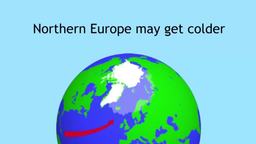
Fuse School: Learn the basics about the effects of global warming on the environment. Some of the problems global warming may cause are changing climate, extremes of weather, problems for ecosystems, rising sea levels, and ocean acidification.
Difficulty:
Beginner
USA
The letter "S" has a couple of different sounds. It's a very important letter because it's used to form the plural of many nouns as well as the third person singular of verbs.
Difficulty:
Beginner
USA
The letter "R" is difficult to pronounce for lots of people, even native speakers. Sigrid shows us how "R" sounds in different kinds of words.
Difficulty:
Beginner
USA
The consonant "Q" is a special letter. We almost never find it without a "U" following it. Sigrid gives us plenty of examples of how it's used.
Difficulty:
Beginner
USA
Most of the time "P" is simply pronounced like a "P," but there are a few cases in which "P" is silent. Sigrid gives us plenty of examples of handy words with "P."
Difficulty:
Adv Beginner
USA
Annette explains three more colloquial contractions people use in everyday conversation: gotta [got to], gotcha [got you], and dunno [don't know]. She also gives us examples in context.
Difficulty:
Beginner
USA
The letter "O" is a tricky vowel, because there are several ways to pronounce it, both when it's single and when it's double!
Difficulty:
Beginner
USA
Like the letter "M," "N" is almost singable. Sigrid gives you some tips about some very important words containing the letter "N."
Difficulty:
Intermediate
Australia
At the University of Sydney, physicist Derek Muller explores the possibility of an anti-gravity wheel through a series of field tests.
Difficulty:
Adv Beginner
France, USA
This song from Schoolhouse Rock is to help kids understand about bones. Without bones, we're just blobs. It was written by George Newall and sung by Jack Sheldon.
Difficulty:
Beginner
USA
Sigrid talks about some important words starting with "M" and gives us some tips about using many and much with countable and uncountable nouns.
Difficulty:
Beginner
USA
Sigrid talks about a different way to say "OK," which involves the letter "L." Not everyone pronounces "L" the same way, and it can be hard to understand sometimes.
Difficulty:
Beginner
United Kingdom
Anna explains when we use the present continuous, or present progressive tense and gives us some examples.
Are you sure you want to delete this comment? You will not be able to recover it.

 Spanish
 French
 German
 Italian
 Chinese
 English
  Español
 Français
 Italiano
 Deutsch
 Português